


Image credit: Ed Hicks
On the face of it, Hackney is the epitome of London modernity.
Amidst all the terraced houses and ethnic takeaways, remnants of the waves of immigration and construction that the borough has seen over the centuries, sit minimalist coffee shops and trendy florists, manned by pierced twentysomethings. Even the old Spar convenience store in Homerton has a hipster burger bar incongruously nestled inside.
But if you’re passing through Clapton on a Thursday evening, listen closely when you pass the 19th Century Round Chapel – you might just hear what was once the soundtrack to Britain’s centuries of maritime domination: traditional sea shanties, sung by the singers of the Trad Academy’s sea shanty choir.
The choir was set up two years ago, by ‘folk activists’ Ed Hicks and Pete Truin – as part of an existing folk music academy based at Chats Palace Arts Centre in Homerton. With their previous folk music sessions and classes at the centre attracting a fairly niche group of musicians and folk enthusiasts, they were only expecting a handful of shanty-singers – at the first session, almost 70 people showed up.
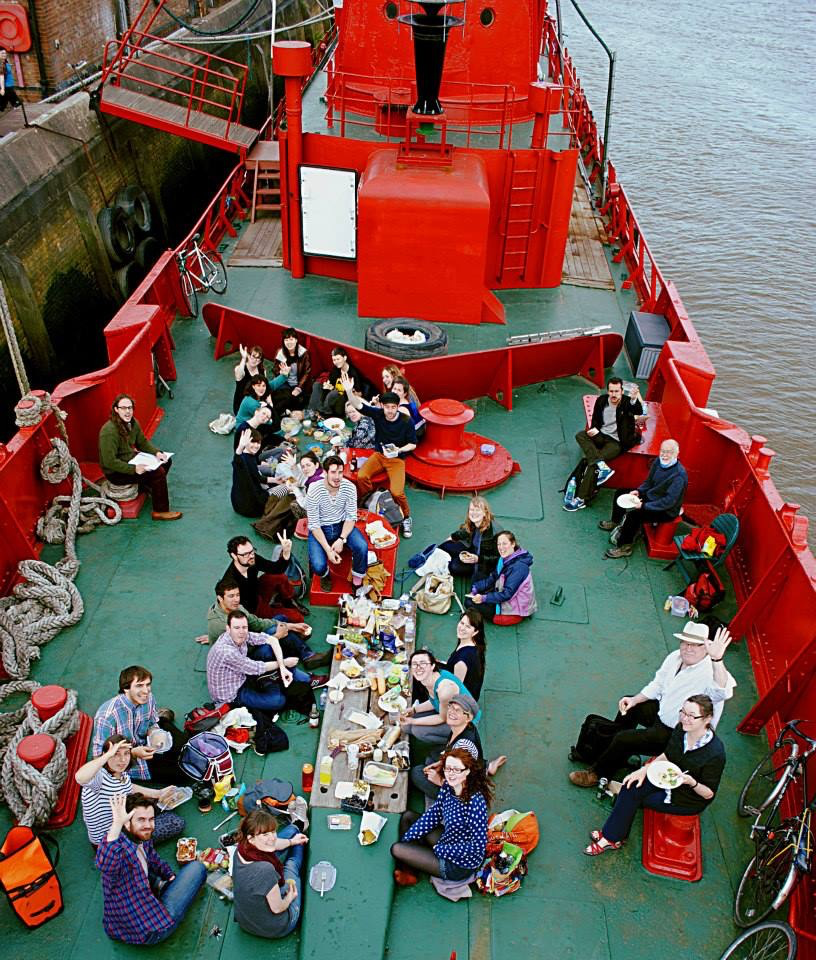
Since then, the choir has been a huge hit. With an album of traditional songs due to be released, a busy calendar of events booked up for the next year, and an all-expenses-paid trip to France for a music festival in August, I thought there wouldn’t be much room amongst folk royalty for a newbie like me. Fortunately, it was the first week of the term, and there were plenty of landlubbers waiting to be welcomed into this band of singing sea-dogs.
Pete led the group, every inch a seafarer – from his flowing, back-combed brown tresses, to the single gold ring in his ear. He’s the founder of the choir, but he walks the walk as well – he’s a keen sailor, and rather than taking the ferry with the rest of the choir for August’s French trip, he’s sailing across the sea in his one-man sailboat. He’s the perfect figurehead for the choir, and he’s always full of joyful energy.
The nautical vibe kicks off straight away. Tentatively approaching the singers to explain that I’m writing an article, straight away an 80-person circle forms around the sides of the chapel (with this being the first session, there’s been a bigger turnout than ever).
I’m stood next to a girl called Charlotte, who I saw come in alone on the way in. She looks a bit nervous and almost as awkward as me, so I ask if it’s her first time too. It is, and we make small talk for a little bit. Pete starts us off with some warm-up exercises, and after 5 minutes of miming pulling ropes and shouting ‘HAUL’ at each other, the ice is broken.
Rehearsals in our new venue @HHBT1 in full swing! Heave a pawl! pic.twitter.com/TuyqW6MkcN
— TA Sea Shanty Choir (@ShantyChoir) February 26, 2015
That wasn’t a ship pun, by the way. For those more cynical readers, a sea shanty choir in the middle of Hackney sounds like the final stage of a violent Hipstergeddon. Naturally, there’s plenty of tight jeans and bulky glasses amongst the singers (including on me), but there’s also local mothers, who arrive five minutes late because they had to put the kids to bed.
Fortysomethings in sharp suits arrive straight from work, a couple of primary school kids get dropped off by their mum, and a couple of old boys in overalls are always there to provide some bass – almost rumbling the floor with their deep voices.
There’s a great sense of community spirit, and I got the sense that all these Londoners are a bit giddy with the possibility of talking and singing with strangers. The songs we sung were rousing and fun – we started with a song about the bonnie ship The Diamond, which went a-fishing for the whale, before going on to sing about the Old Riley, a packet ship bound for America.
After that, we sung about… well, about another ship, the Santiana – this time, it was heading to Mexico. The final shanty was called ‘The Last Leviathan’, a sad song, sung from the point of view of a whale whose comrades have been killed by whalers.
There’s certainly not much deviation from a theme in sea shanties, but all the songs are beautiful, fun to sing, and full of rich history. There’s a sense that we’re helping keep a very traditional art form alive – especially with Pete dispensing tidbits of trivia about maritime history in between songs.
The session draws to a close, and everyone’s a bit spent from two hours of singing, and hoarse from shouting ‘heave!’ and ‘haul away!’ after getting into the pirate spirit a bit too much.
It’s not a shanty, but Jim Radford singing ‘It’s all part of being a pirate’ is too great not to share http://t.co/3XAyR8HAr8 #shareashanty
— TA Sea Shanty Choir (@ShantyChoir) February 23, 2015
Then, everyone’s off to the pub, to share mugs of grog and tall tales of the sea. The choir’s a bit of a legend at the pub, with the group usually breaking out into shanties after a few drinks.
There’s strong elements of tradition, roleplaying and community bonding in the choir, which may explain its great success over the last couple of years.
They’ve got a number of shows in the works, but in the meantime, there’s plenty more shanties to be sung. I’m going back next week. The Trad Academy sea shanty choir practices every Thursday at The Round Chapel on Glenarm Road, Clapton. Newcomers are always welcome, and no prior experience is requeired. Membership is £25 a month, or £15 for lower income members.
Passes for four sessions can be purchased for people with less flexible schedules.


Thanks for alerting us DP. The article has been amended.
You know Pete’s name is Truin, not Gruin.