


Hackney Wick Football Club are to resume their training programmes on 29 March, as per the government roadmap out of lockdown.
The ‘Wickers’, as they are known, have been unable to play since 19 December, when London entered tier 4 Covid-19 restrictions.
The club, founded by Bobby Kasanga upon his release from prison in 2015, has become a fixture in the community.
There are 23 Hackney Wick teams, including boys from under 7’s, girls from under 14’s and an under 10’s disabilities side.
Guiding the community’s youth
Like many other grassroots sports teams, the club has felt the pinch of the pandemic, both financially and perhaps more crucially, socially.
“Some young people are getting caught up in the underground, youth violence sort of thing, because there is nobody there to guide them,” Kasanga told the Hackney Post.
“We’re predominantly a sports club, but we also run music and drama classes, as well as mentoring sessions for young people.”
However, due to the coronavirus outbreak, all of these services were stopped last March.
Kasanga believes that these activities provide vital guidance to young people, and are key to showing them that “the gangs and that lifestyle” are not the way.
Last week, Hackney Wick announced a return of their ’32 Borough Cup’ that aims to bring together youth football teams from every borough in London for a tournament.
The goal of this is to try and convince youths “that all of London is accessible”, says Kasanga. It matches with their motto: “Think Outside the Blox.”
The consequences of the ‘gang lifestyle’
During the last few months, the club has been able to run online workshops on topics like gang culture and violence, drawing on both Kasanga’s experiences and guest speakers.
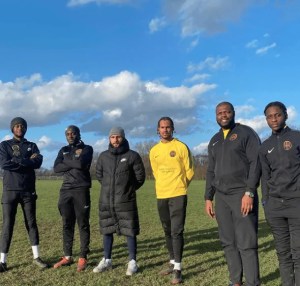
“People were allowed to ask questions and I can give wide knowledge from where I’ve been, as well as having panel discussions,” he said. “These were able to give the kids a sort of base [understanding] on the consequences of that [gang] lifestyle.”
Kasanga says that these sessions have been really successful in terms of the interviews they’ve managed to do on their social media accounts, most notably Instagram.
Pre-pandemic, one of the conditions of playing for the club was that you had to do at least two hours of volunteering in the local community.
However, with football and the other services having stopped, Kasanga believes that this has provided an opportunity for gang grooming.
“Did you know about this kid, here? He’s gone to go and do county lines,” is some of the stuff he’s been hearing from other community figures and colleagues.
Kasanga can hope the resumption of football will provide a push back in this regard. The success of the first team might help: in their last game before Christmas, they beat the league leaders, Wivenhoe Town, 1-0.
Unfortunately, owing to Hackney being the only London borough without a ground suitable for semi-professional football, the team are currently having to play their home games 40 miles away in Witham, Essex.
Plans are in place to move back home by 2022 but as it is, the club will just be happy to get back playing, wherever that may be.

