

Mario Ledwith and Francesca Holloway investigate why family life on the borough’s waterways may be drying up
The sweet smell of baking fills Sophie Duval’s kitchen. As she potters around, her friend and next-door-neighbour, Caroline Neller, keeps an eye on her 15-month-old daughter, who is crawling in front of the adjoining lounge’s stove. Sophie soon joins them to attend to Bridie’s feeding demands. The friends natter, unaware of the unpleasant change in the room’s aroma. When Sophie realises she dashes to the oven, pulling out a blackened banana cake. Caroline and Bridie immediately burst into laughter and she has no choice but to join them.
The scene may appear to be one of classic domestic bliss, but for Sophie and Caroline, their home life is far from straightforward. The friends are part of east London’s floating population, currently docking their canal boats in Hackney’s portion of the River Lea. And their simple existence may not last much longer: last month British Waterways (BW), the canal and river regulatory authority, announced plans to tighten regulations for boat dwellers living in the area.
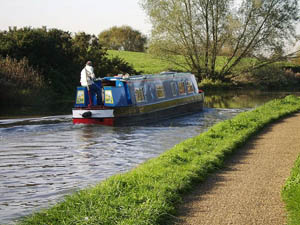
Barges could be sailing out of Hackney. Photo: Gavin Stewart
Like all other river dwellers in the East End who don’t have a permanent mooring, the neighbours’ are required to relocate their boats every two weeks in order to comply with their ‘continuous cruiser’ licence. Under current rules, boaters can tailor their relocations to one particular stretch of the river. But BW claims this is a problem, saying the number of boats in east London has increased by 40 per cent in the last four years, leading to congestion and difficulty for other water users. To address the issue, they have proposed creating six large neighbourhoods, which boaters must move between, docking for weekly or fortnightly periods only. If they overstay their welcome, fines will be issued, which could result in annual fees of up to £7,000.
While BW claims the measures are the only practical way of addressing the overcrowding, the boating community feels the measures will effectively end their comfortable way of life, some branding the move as “social cleansing”.
“The changes will make living in London without a permanent mooring impossible because the zones are so ridiculously large to move between,” says Sophie, 39, an actress. “Most of my childcare is in Hackney and, because I’m a working mum, if I start moving about it’s going to be really hard for me to cope.”
Boaters constantly relocate in order to access facilities, such as water pumps and sewage disposal points. But it’s feared that by introducing compulsory relocation over much greater distances, the community will be stripped of the geographical permanence that is needed for them to lead a stable lifestyle.
Nick Brown, secretary of the National Bargee Travellers Association, believes the intention of BW has always been to rid the River Lea of its boaters, citing the effects of similar rules on the Kennett and Avon canal.
“They’re trying to increase the distances we have to travel by so much that coupling relocation with the continuation of our lifestyle becomes impossible,” he says. “The rules are extremely draconian and breach the Human Rights Act because, essentially, they’re trying to define where people can live. And they have no legal right to do this.”
Caroline, 38, an occupational therapist who has lived on her boat for four years, says the upheaval would make it “impossible” to hold down her job. Docked beside the Springfield Park Marina, Cathy Bennett expresses similar concerns. Her boyfriend already faces a one hour commute in order to take his degree at Middlesex University and being forced to move further along the river would double his trip.
The boating community suspect that the measures have been introduced to drive them away from the area before the upcoming Olympics.
A document from BW, seen by The Guardian newspaper, says: “The urgency… relates to the objective of reducing unauthorised mooring on the Lea navigation and adjacent waterways in time for the Olympics.” But the body have denied the claims.
The boaters, who describe themselves as “gatekeepers of the canal” – believe that whatever BW’s intentions, the measures will inevitably cripple their ability to lead a peaceful life on Hackney’s waterways.
“In London there is a complete lack of affordable housing and I definitely can’t afford to buy a house,” says Sophie, nursing her child. “I don’t have to claim housing benefits and I don’t have to claim income support. I’m an independent working person and that’s because of my boat.”
Caroline nods in agreement, surveying the dainty interior of her friend’s boat with a reminiscing eye, almost as if to confirm that its days are numbered. “These are our homes… I mean, where else are we meant to go?”

British Waterways’ consultation for the River Lee Navigation comes in response to a 40% rise in the number of boats on the river which has increased pressure on waterway facilities and impacted on all river users. We would need to address these issues with or without the Olympics.
As London’s second river, the Lee is a superb facility enjoyed by thousands of boaters, rowers, walkers, anglers and cyclists. British Waterways is committed to finding a solution to the current overcrowding of boats, and this is why British Waterways has asked for feedback on the draft plan. This should be beneficial to the majority of the people who use and enjoy the river and fair to the boaters who legitimately follow the terms of their licence. The draft plan is not a change to the rules; instead, it proposes to enforce the existing conditions in a way that allows those who bona fide continually cruise to continue to do so without incurring any extra charges. We have publicly committed to work with all interested parties, including live-aboard boaters, boating organisations, local clubs, councillors and MPs to find a solution that has minimum impact but maximum benefit for all.