


Photo credit: Ludovic des Cognets
Days like this were made for goofing around. It’s an 18oC Saturday afternoon in Hoxton, as sun-kissed crowds waft in and out of Old Street station looking for somewhere to lie down.
Not here, though. I’m three minutes into a circus experience day at the National Centre for Circus Arts (NCCA) and I’m already working up a sweat. Here, in this beautifully refurbished Victorian power station, they don’t do clowning around.
The recently renamed centre – formerly Hoxton Circus Space – has admittedly earned the right to take itself seriously. This month the government elevated it to ‘national’ status, following a year-long campaign to create more opportunities for home-grown circus talent in the UK.
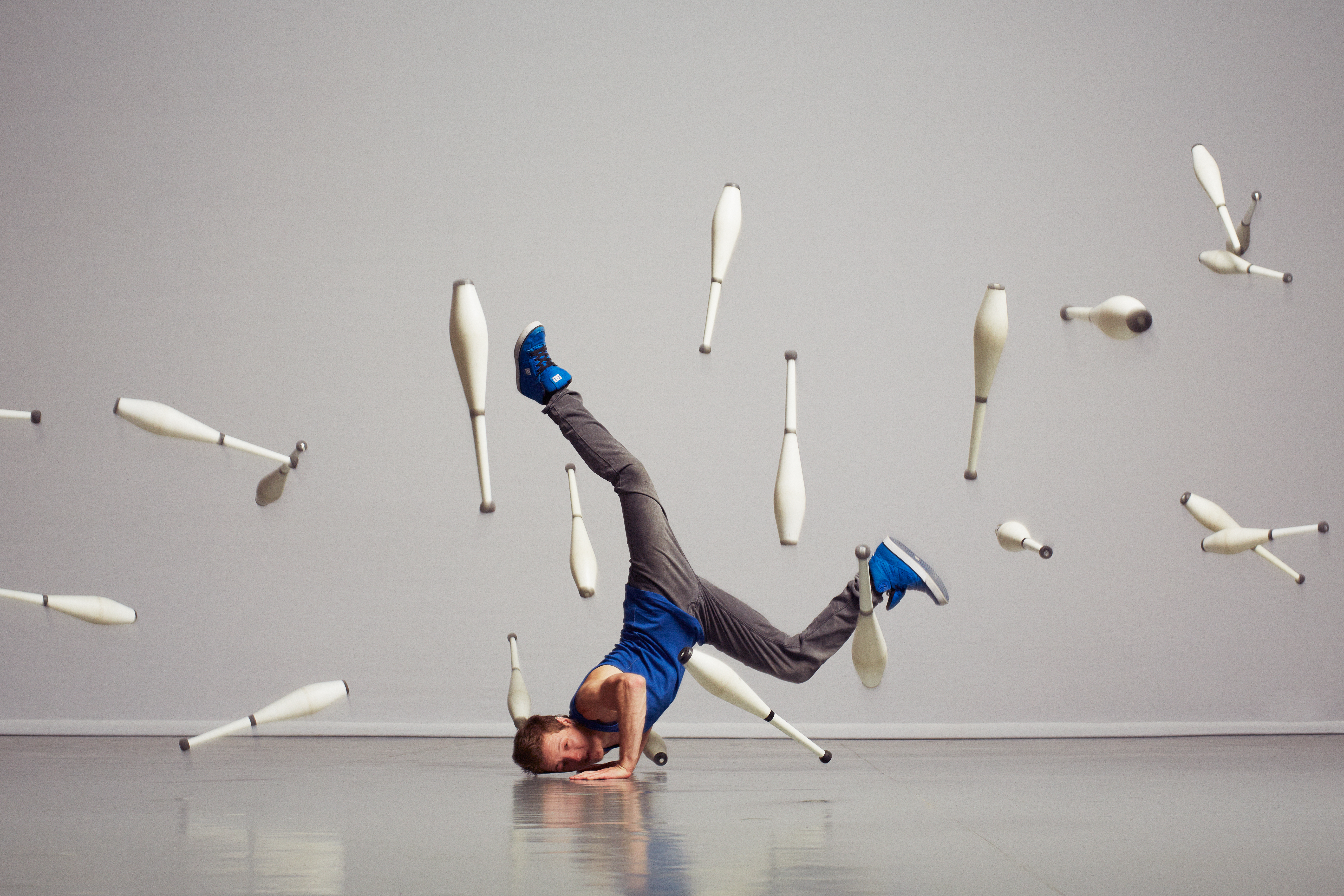
In 25 years, the centre has trained more than 50,000 jugglers, acrobats and trapeze artists. It remains the only place in the UK where students can earn a degree in circus arts, with 180 trained to degree level in the 14 years since the BA Hons programme started. All this, and not a custard pie in sight.
Down in the rehearsal room, we novices are still a little nervous. There are 10 of us involved in the warm-up – seven girls, three boys – and so far, no one has said a word. The trapeze platform above us is swaying gently, but I’m keeping an eye on it in case it makes any sudden moves. I’m ready for action. You can’t be too careful around these big-top types. Remember your training, boys: duck and roll. How do you conquer a circus? Go for the juggler.
“We’ll start with acrobatics on the mats,” says Kaveh, our trainer, which is reassuring. “Let’s split into threes, and we’ll practice on the floor, nice and easy.”
I decide that “easy” must be circus-speak for “excruciating” because a sharp pain immediately shoots up my thighs, but this is evidently because I have the world’s least elastic hamstrings. Everyone else is having fun.
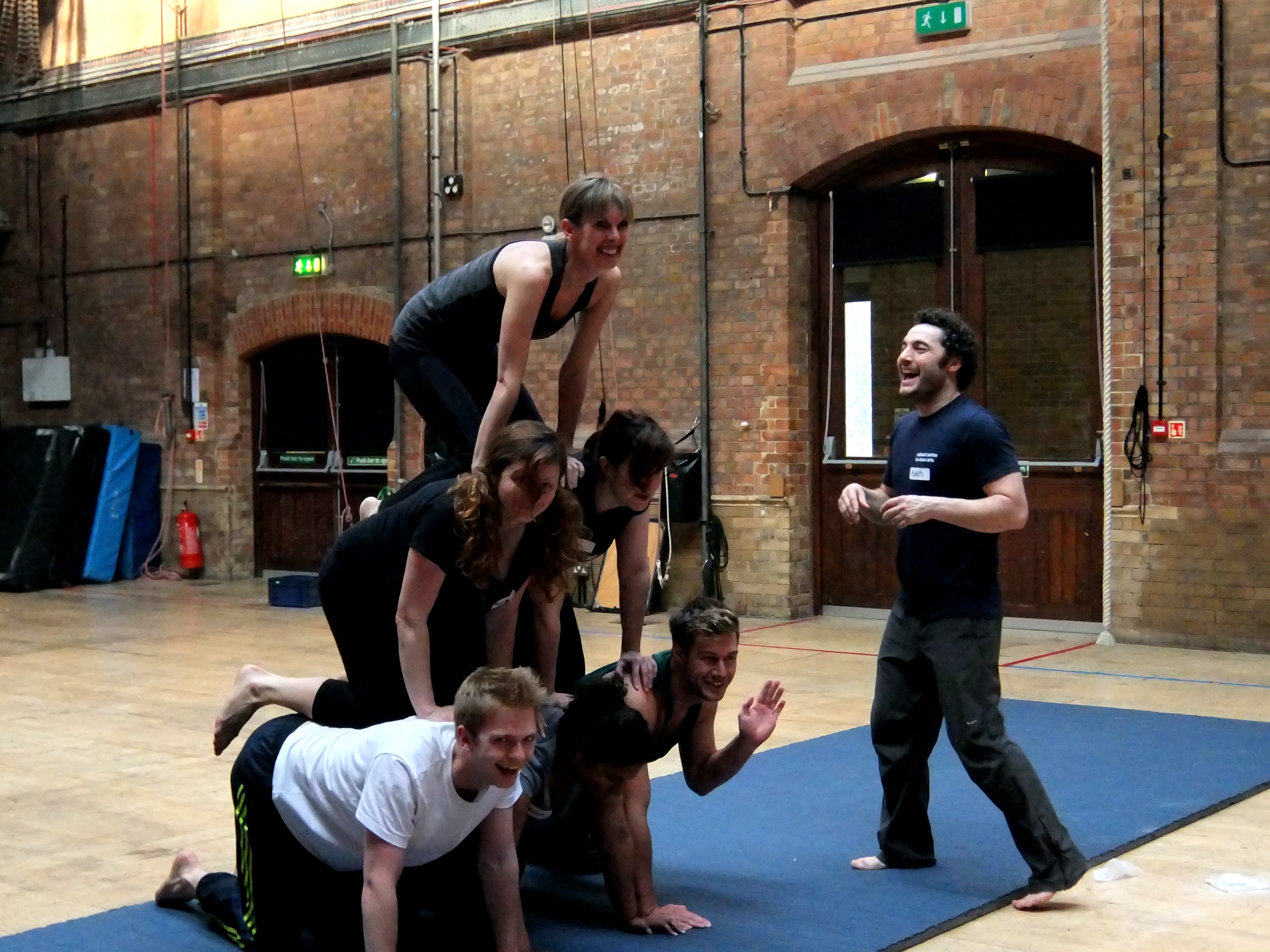
The curly-haired Kaveh runs us through the next routine carefully, and this time it all clicks into place. Lying down, Partner A (me) locks his shoulders into the ground, bracing to support Partner B as they ease backwards. Then, while maintaining this position, Partner C clambers onto B’s knees and stands up, locks arms with B and leans backwards.
B and C, incidentally, are men who are both well over six feet tall. I can’t feel a thing. I decide Kaveh is a magician.
Tim Roberts, director of higher education at the NCCA, explains later that concentration is imperative to an art that is made to look effortless. “Success comes in realising that it’s harder than you imagine, but that if you persevere it becomes one of life’s most rewarding things,” he says.
“For example, learning to stand on your head for just one minute is hard, and it takes a lot of practice. But once you can do it, you gain a whole new perspective on life. You learn to look at it from another point of view.” So far all I’ve gained is a headache, but I get where he’s coming from.
Back in the studio, Kaveh has disapparated, and another instructor has emerged to teach us the mysteries of the flying trapeze.
“I’m going to shout lots of instructions at you now, and you’re going to forget all of them by the time you get up there,” she says. “Don’t worry, that’s normal. You’ll probably survive.”
Cautiously, I climb up to the platform. I’m trying to keep humble. Pride comes before a fall, which I think probably often comes after scaling an 18-foot ladder.
Again, there’s a precise series of movements to execute once you’re in the air, but inevitably I’ve forgotten them. Swing-out, swing-in, something-something, but it’s okay because I’ve jumped anyway and nothing seems to have gone wrong.
“Well done,” the trainer says as I alight, “but try to lock your legs out for longer next time.” I nod confidently, and return for another go. I’m a natural, I think as I swing out, before crashing heavily into the platform on the way back. Hardly the next Karl Wallenda, daredevil circus act who founded The Flying Wallendas.
Bruised but not beaten, I ask why others have signed up to the party.
An exhilarating form of exercise
For some, it’s just an exhilarating form of exercise. “I’m not at all flexible, and I wanted to do something about that,” says Alexis, who works as an innovation consultant. “This just looked so much more fun than yoga, or Pilates, or stretching at the gym.”
Jules Matthews, a photographer from Winchester, is part of another trend. Her interest was piqued after a tour of circus tents: “I’d been to Cirque de Soleil, to the shows at the Roundhouse and to Circus Maximus at the Udderbelly Festival, and it just seemed like so much fun. When I saw the chance to sign up for an introductory experience day, I jumped at it.”
Jules is one of many surfing the crest of a UK-wide wave of new circus acts. Britain now boasts 71 circus companies, while many of the NCCA’s graduates performed in last month’s international CircusFest 2014 at the Camden Roundhouse. Encouragingly, 93 per cent of all their graduates find employment in circuses and beyond. Companies such as the Royal Shakespeare Company and English National Opera are keen recruiters.
Sadly, the remainder of the afternoon suggested that I’m unlikely to make the select cut. Juggling proved to be a flop, so I practised my boules game instead.
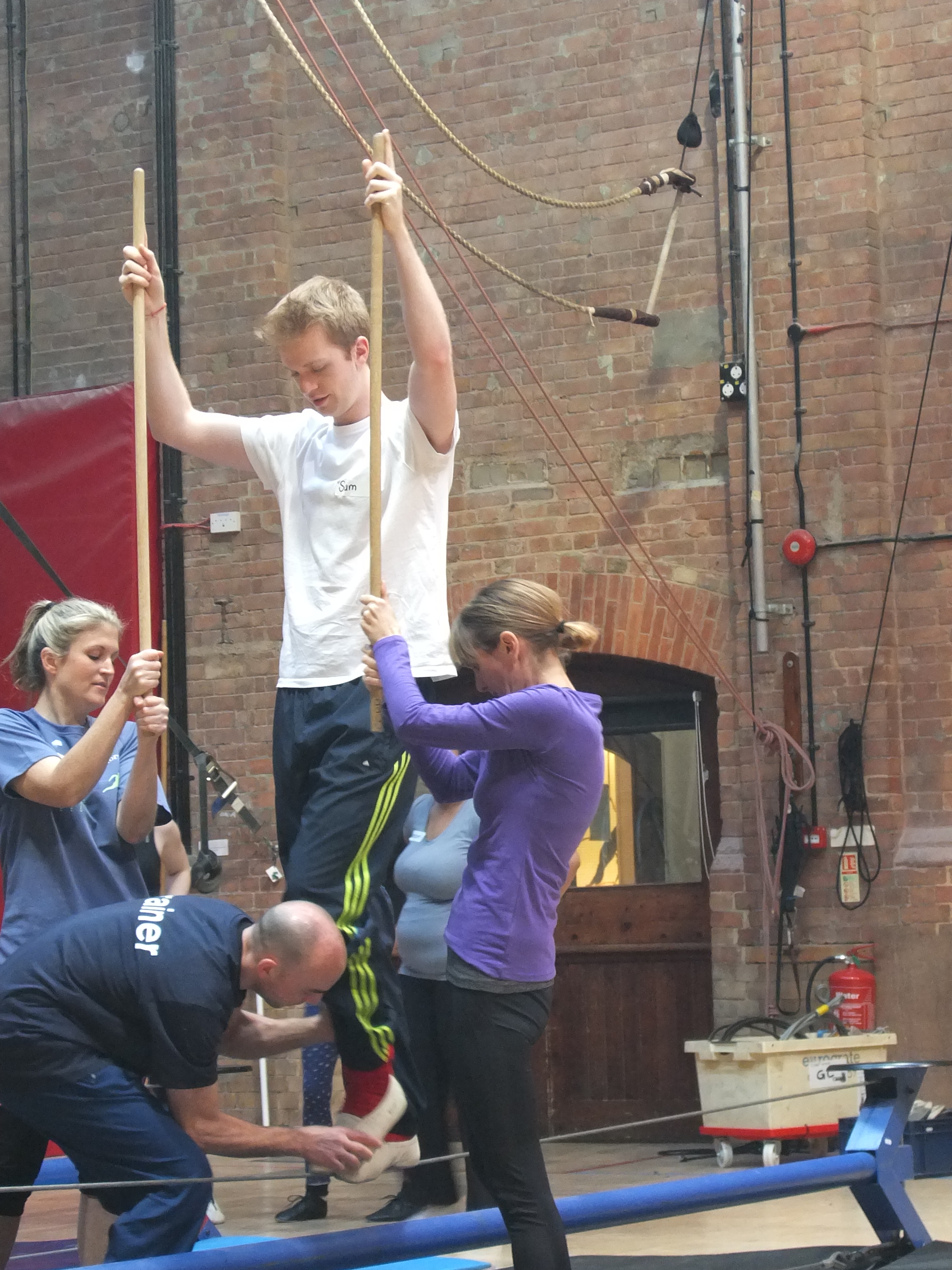
The tightwire was less tricky. I abandoned the step-by-step method endorsed by our trainer in favour of a more straightforward screw-it-and-run approach. I’m not sure it would have flown if I was suspended between the Tower Bridge towers, but six inches off the ground it worked a treat.
Tired, tight-wired but happy, the session starts to wind down. The early silences have long since made way for happy chatter, as group members swap numbers and agree plans to come back.
“I suppose it’s hard not to feel closer to someone after you’ve had their backside pressed to your shoulders all afternoon,” muses Alexis.
With class dismissed, I trot off into the Shoreditch sunset. I wasn’t sure I would gain a new perspective, but my hamstrings tell a different story. Until today, I hadn’t touched my toes in years, but now I can see things upside down.

