


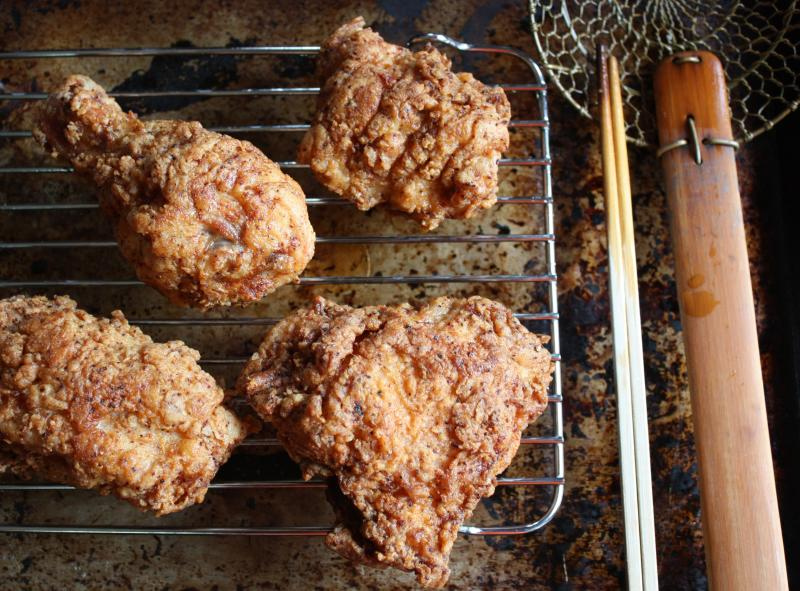
Everybody loves the occasional takeaway, but it’s hard to imagine having it every day. In times of financial strain, fried chicken stores thrive from locals looking for cheap eats.
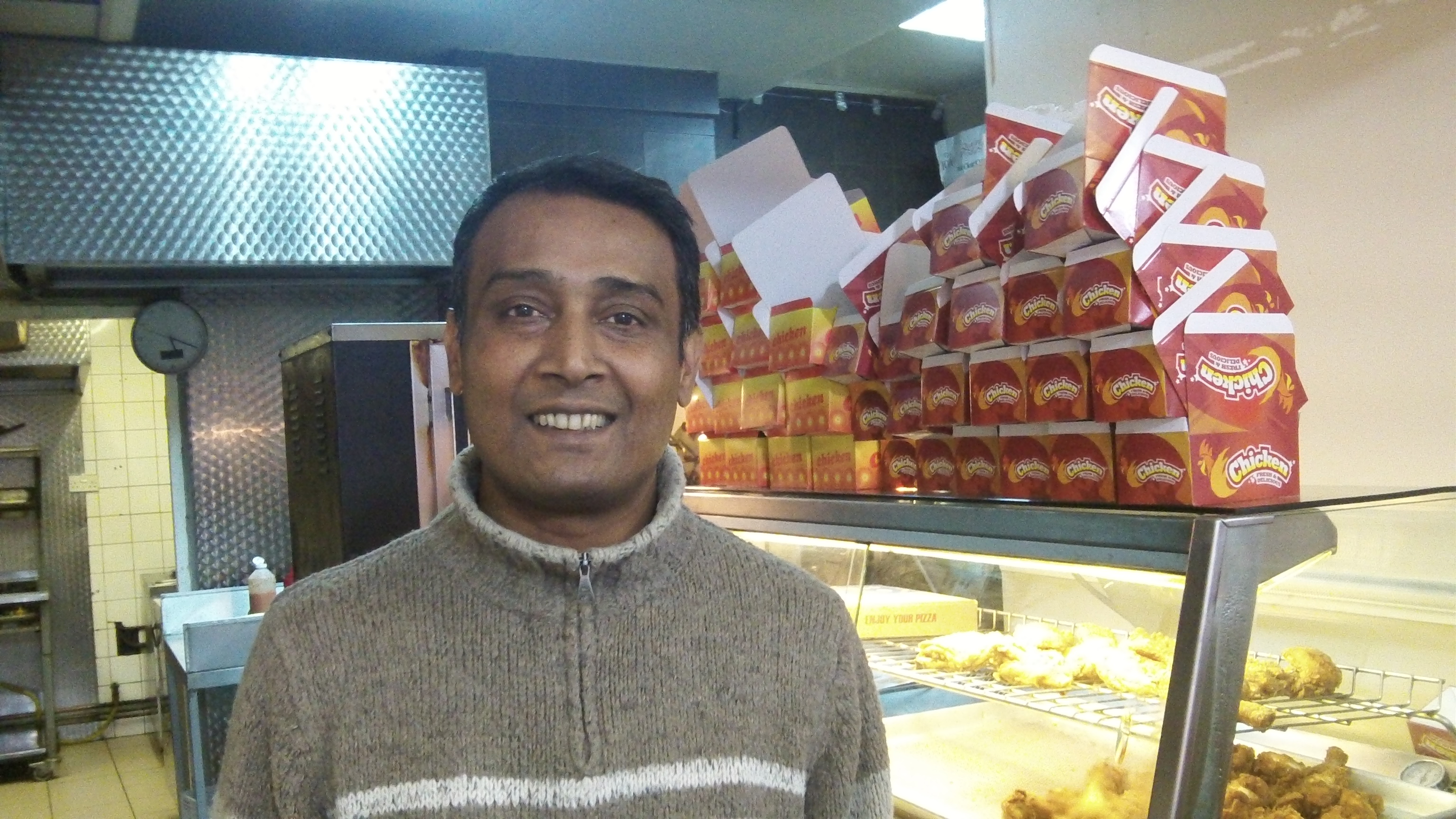
Greasy chicken bones litter the streets like cigarette butts in a borough caught by Kentucky fried fever. Abdal Khan, of ‘Chicken and Pizza’ on Amhurst Road, dubbed Hackney the “chicken capital of the world” and it’s hard to see otherwise.
There are around 160 fried food takeaways in the area, which equals eight per square kilometre. With this concentration, residents are never more than a 10 minute walk away from a deep-fried treat. A chicken and chips meal will set you back £1, leaving residents of one of the UK’s most poverty-stricken areas flocking to them every day.
“The attitude towards chicken is to ‘eat as much as you can’ because it’s cheap. Kids of nine or ten come in every day. There’s even one very young school-kid from around here who comes in every day after school and comes back three or four hours later for dinner,” Mr Khan added.
But as more and more people lap up the cheap grub, it is up to the council to make sure the food is hygienic. Up until the end of last year, the Hackney authorities ran a scheme with national food watchdog, the Food Standards Agency, which required inspectors to give every eatery in the borough a hygiene score out of five. Businesses were left to choose whether they wanted to advertise these on their front doors.
The ‘Scores on the Doors’ online database only shows the hygiene ratings for 40 per cent of the 160 fast food outlets across the borough.
The council launched a new hygiene plan in December to curb food poisoning, but the new site, food.gov.uk/ratings, only shows ratings for 12.5 per cent of the borough’s takeaways, showing a 27.5 per cent drop in public hygiene information. The huge gap in information surrounding Hackney’s fast food outlets shows how little we know about what we are eating. When The Hackney Post contacted the council for an explanation they were unable to comment.
‘Dixy Chicken’ in Hackney Central, one of the 20 takeaways listed on the database, has a paltry one out of five star rating, indicating that the establishment is failing to comply fully with Britain’s food hygiene laws. This is based on an inspection from as far back as May 2012.
Cabinet member for health, social care and culture, Cllr Jonathan McShane said that residents “can be confident that the food business they choose to eat at or shop from is striving for professionalism at every level when they see the Food Hygiene Ratings Scheme sticker in the window”.
A 23-year-old Hackney fried chicken shop worker of five years, spoke of the industry’s bad practice.
“After cooking a piece of battered chicken, you can only serve it within an hour, but staff leave it on a low heat all day, creating a breeding ground for bacteria,” he said.
“They do it to cut costs and get the most out of their stock.”
The man also criticised the council’s hygiene regulation regime, claiming that food inspectors don’t come to premises and update scores regularly enough.
“If a customer contacts the council with a complaint, chicken shop owners are visited and given a fixed date for an inspection. This gives owners time to fix the problem, pass the inspection and go back to their old unsanitary ways.
“These inspections don’t offer long-term policing and the fines aren’t high enough to act as a decent deterrent. No-one really knows how clean a chicken shop kitchen is,” he added.
Passing the bucket
should
In an article published in the Guardian at the beginning of this year, shadow public health minister and Hackney North Labour MP Diane Abbott took the lead in criticising the fast food culture that is affecting children health, describing the trend as “McParenting”.Ms Abbott said: “I am looking at planning legislation to make it easier for local authorities to ban not just McDonald’s, but those chicken and chip shops that cluster around schools.
“I certainly think as part of Labour’s policy review we should make it easier for local authorities to use public health criteria in planning to stop the proliferation of chicken and chip shops. For too many children, fast food is not a treat but a dietary staple.”
Indeed, the growing abundance of fried food shops is underlined by the fact that there are now over 10 for each secondary school in the borough. This figure does not take into account Hackney school children’s access to fast food joints in neighbouring boroughs.
Almost all of these takeaways are private businesses that unlike big companies like KFC, don’t have a national image to maintain. While their true hygiene remains a mystery, Mr Khan expanded on his “academic interest” of the phenomena. He stressed that mothers shouldn’t be letting their children eat the chicken at all.
Mr Khan said: “People shouldn’t be eating the stuff I make at all. People’s diets mirror their social class and unfortunately the abundance of broken families around here is reflected in the dietary choices of the kids that come in here. What you eat at the age of 10, you eat for the rest of your life.”
From the potentially dangerous, dirt-cheap meat to its mass consumption across the borough, Mr Khan agreed that the fried food boom is a “major issue the government must deal with”.


On the wider point about childhood obesity, one of Hackney’s Scrutiny Commissions recently investigated ways to tackle childhood obesity in the borough. Details about what they did, and their report are here. The Scrutiny Commission has made 7 recommendations to the Council’s Cabinet for steps that should be taken – including the use of planning policy to restrict new fast food take aways near schools. They’re expecting a response in April which will be published on the same web page.
More information on how Scrutiny Commissions work in Hackney is available at http://www.hackney.gov.uk/scrutiny.